

Back Your Bench!
By DB Hammer
EliteFTS.com


Is your bench press wrecked? Not stalled or stubborn, but actually wrecked- no matter what you do, it’s stuck? Don’t shy from admitting it, after all, you’re not alone. Okay, so do you have the gonads to admit you’re suffering but do you have enough sack left to do what’s needed?

There are an infinite number of reasons why performance stalls, no question about it, so this article is written to instantly gratify you with a few easily implemented yet often neglected cures.


Prime Anatomical Position (PAP)

Try bench pressing with your shoulder blades protracted (pulled forward) versus retracted (shoulder blades back and tight). What you find is that the more your shoulders are protracted (pushed forward), the less force you can apply to the bar (pecs and delts taken out of the movement and triceps reliance is engaged). This is due to the fact that if your skeletal system is in proper alignment, and each limb is associated with the next link in the chain properly, then performance production is promoted. That is, your best results will come from being in your best structural position. Even the slightest error from this “best position”- the PAP- may result in a dramatic halt in performance. Furthermore, each time that you practice via an inferior system construct, you are perpetuating self destruction and you are inhibiting the contractile units to do their job optimally. Over time, your posture and performance will look very poor. Lastly, even the “jungle-gym” trainers out West will want to integrate PAP understanding to their programs since injury avoidance is highly reliant on neglecting undue stress to the contractile units (i.e. decrease risk of tendonitis and muscle tears). 


Healing the Hurt

It’s getting more and more difficult to have a discussion about the bench press these days without ending up in talks about elbow and shoulder problems. This trend regarding ignorance to prime the system back into proper postural alignment is increasing exponentially. It is just as common to see a guy with bad posture as it is to find an athlete who suffers from chronic shoulder and/or elbow problems. The fact is, and what we have had to learn to drop our injury rate to 0%, you can’t wait to fall out of the ship before you learn how to swim. Fix the problem before it starts, or before it gets severe. You do this, partially, by performing off-set techniques to maintain and/or bring your bone structure back to PAP- once again, allowing your muscular system to function properly. Taking into account the most common training bloopers, the following list of exercises should help most of you “heal and steal”- fix your minor injury and swap a new personal record in the process.


ProSup Extensions

The problem with bench pressers, as well as some other athletes, is that they seem to be overly reliant on one grip orientation. This results in certain muscles of the lower and upper arm being developed to a higher degree than their associative muscles, which perpetuates injury and poor performance. For instance, if muscles that turn your hand over and palm-down (“pronaters”) out weigh the development of the opposing muscles which rotate the hand so that the palm is facing up (“supinaters”) then the integrity of your elbow can be compromised. Anyone heard of Tommy John’s surgery? This is may be the culprit for a lot of athletes who have had to go under the knife with that procedure. It should be noted, however, that an injury potential is usually not realized in this regard until your system is pulled out of PAP.

For this reason, and others, this movement may just be the savior to your elbow health AND your bench press numbers are likely to jump. Perform this gem by laying face up on a bench with a DB in each hand. Your palms will be facing the direction of your feet- pronated grip- at the top. You will then gradually supinate your wrist orientation as you descend the DB’s. With this fluid rotation and descent, the mid-range position will be achieved when your palms face the floor (your face) as the DB’s float just above your forehead. The concentric portion is a mirror image of the drop, simply pronating your wrist in harmony with the degree to which you ascend- achieving full pronation just as you achieve lock out.


Dip Shrugs

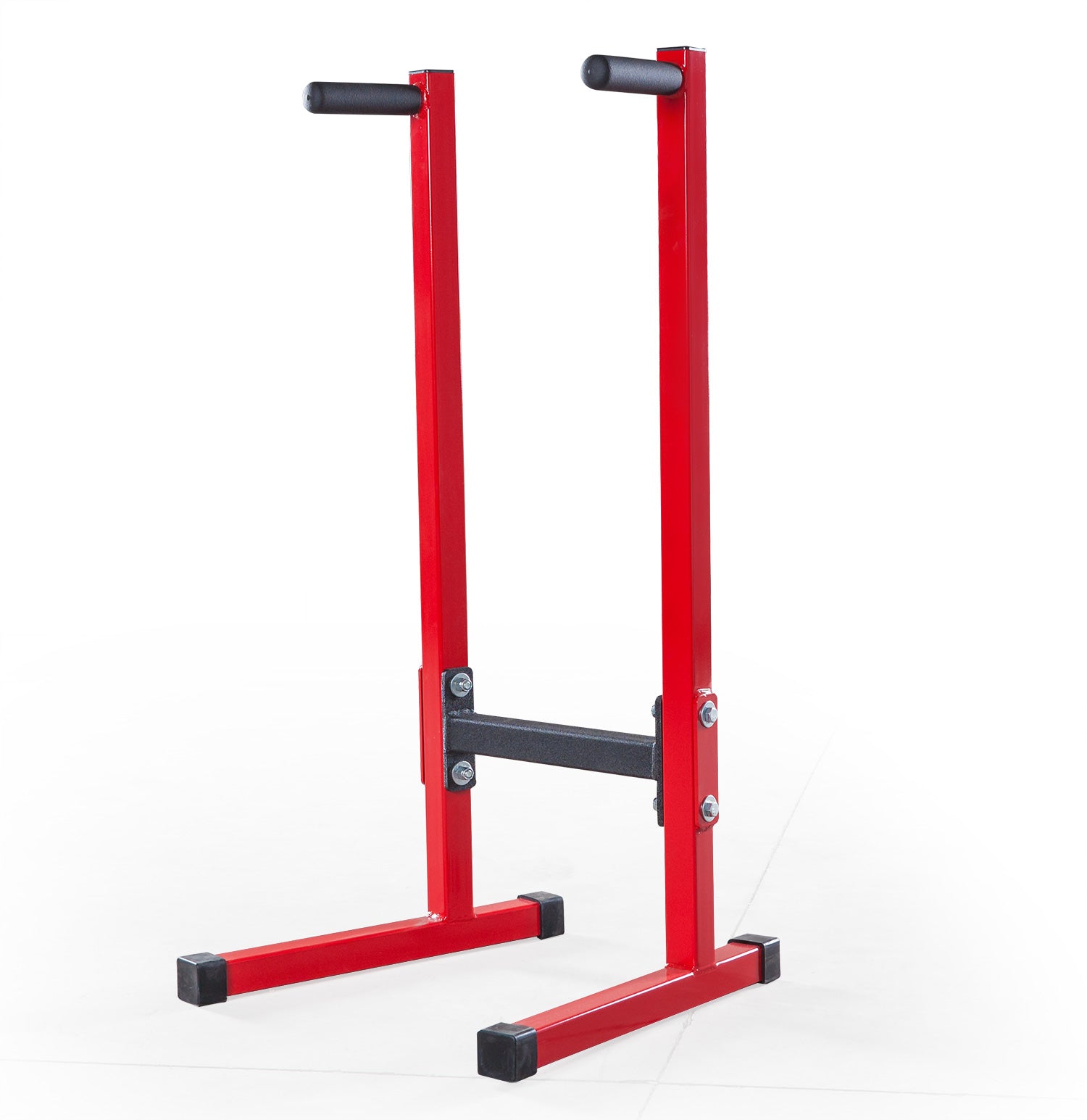
Only the best athletes seem to possess good scapular (shoulder blade) control. With that in mind, this exercise will promote PAP achievement, upper lat development, pec development, and even trap development. This specific exercise, however, is implemented to depress the shoulders, primarily, with conditional cases to better regulate the integration between these involved muscle groups.

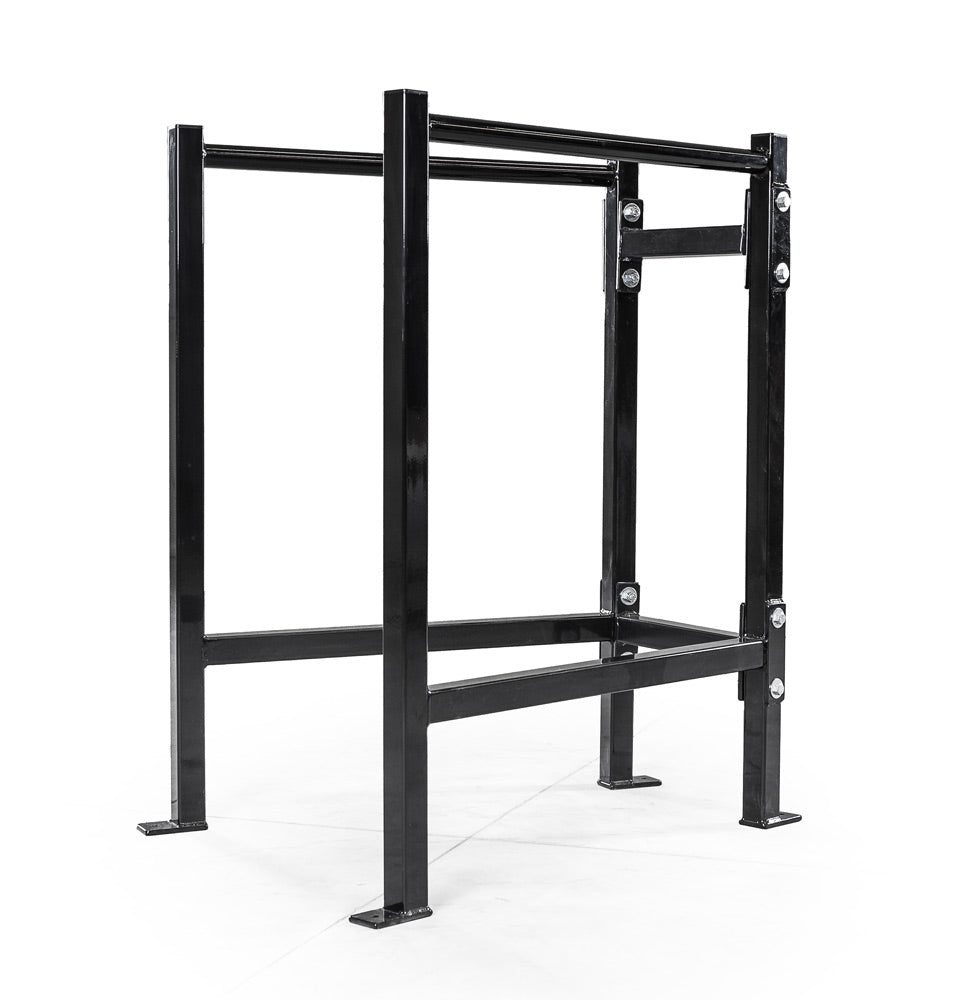
The execution involves performing an inverse shrug on a parallel dip bar device. The distance between the dip handles should be proximal 32”. Note: your shoulder blades should be back and held static at this relative horizontal position as the vertical movement is carried out. Maintain semi-stiff arms throughout- this is not a full-dip.


Incline Front Raise

This movement is designed to promote better posture with the shoulder complex as well as rid and protect you from the slight hunchback syndrome that occurs at the nape of the neck. Essentially, this movement will help to terminate upper back problems and restrictions on performance.

Perform a neutral grip (palms facing each other) front raise to full overhead extension (upper arms even with torso). The separation between the two DB’s may be manipulated to better serve your individual purpose. In short, trap- and rhomboid- weak athletes will take a slightly wider separation. Bench angle may also be toyed with to match up with your preferences and needs.


Scapular Pullups

This movement will directly and indirectly blast your bench. Indirectly, you will promote a shoulder retracted and depressed position- essentially, making the adjustments needed to achieve your PAP through deficiency training. However, most athletes rave about the direct effect on their bench press. The simple truth is that very few athletes know how to develop their upper lats, except gymnasts. How do gymnasts develop such impressive upper lats? They do a ton of “bar work” in their sport, primarily from a hang position. After all, the only time that the upper lats are brought into play is when the arms are fully- or proximal- extended overhead.

For this one, use a palms facing grip and perform a semi-stiff arm pull up. The range of movement will only be about 5-6”, mostly propelled via the depression and rotation of the shoulder blades via the upper lats, primarily. Why the partial movement? Why not perform just full range pull ups or pull downs? The answer is simple: the upper lats can handle significantly more load than the rhomboids can handle at the top range of a pull up, thereby a training effect is not strongly put into effect when a full range movement is used. Once again, gymnasts develop their impressive backs from mostly hanging in this Scapular Pull Up position and through reactive loading of such positions, not from doing conventional style movements. 

Now the impressive part; the thicker your upper back, the better you are able to use friction between your upper arm and upper lats to lift big weights in the bench press. Moreover, not only does the upper back promote getting out of the hole on its’ own but the friction effect allows athletes to handle greater loads as their leverages decrease (as the bar nears the chest/ upper arm reaches parallel to the floor). The net result is a shorter range of movement to which you actually have to struggle. Results: 5-10% bench press improvements are typical over a few short months.


Supinated Grip Rows

This movement is the perfect reciprocation of a bench press. That is, the action around the elbow and shoulder is virtually the exact opposite of the bench press, which is needed to draw everything back to PAP.

Use a supinated grip (palms up) for this movement and row to the naval with the shoulder blades pulled strongly together. As for loading, use a cable apparatus, a barbell with a bent over row, or even a chest supported row device, to name a few. Extended work with this method will help to rid you of elbow and shoulder problems. But, more importantly, you will strengthen your rhomboids to such an extent that your shoulder blades will be pulled into their best position for work in a natural rest, which will result in a shorter bar path during work with the bench press. Test this one out on your own. Lay down in bench press position and play around with different positions of your shoulder blades. Do you notice that when you pull your shoulder blades back that your chest rises to the ceiling, thus creating a shorter distance between lockout and your chest? You should, as this is part of the purpose beyond performing this movement.


Wrap Up

There are already too many training movements in existence, and this isn’t what we need. What we need is better modalities and methods, primarily, with a great way to manage this work. Therefore, my purpose is not to add coal to the fire but to simply give you a few purposeful and practical exercises that can be integrated into your program with relative ease. These are not exotic exercises that you are likely to try once and then discard. Rather, these exercises are critically important for many athletes involved in many sports and you will surely note the benefit as you apply them. In fact, you might just discard some of your old movements along the way.


About the Author:
Dietrich Buchenholz, known as “The Hammer” by his peers and clients, is currently about to finish his first English-text book regarding the future of sports training. For those who are interested, you are welcome to contact him directly at DB@SchnellFitness.com. And, as always, all questions, comments and/or complaints are welcome.