


What I Learned at the Defranco Seminar

By Paul Vaillancourt

For www.EliteFTS.com


On July 20, 2007, my wife and I rented a car up here in Canada and headed for Wyckoff, New Jersey. Hidden away in the Garden State Industrial Park is the most intense athletic training facility in the world. It’s better known as Defranco’s Training Systems. Joe DeFranco has trained hundreds of athletes, and I’ve yet to see anything less than spectacular results with his clients. The results are nothing less than the best.
As if going to hear Joe speak about training athletes wasn’t enough, we also were going to hear from Dave Tate and Jim Wendler. This weekend had become the highlight of our summer, and we weren’t even there yet. We were as excited as little kids at Christmas to be attending a seminar put on by EliteFTS at Defranco’s facility.


After the eight-hour drive from Renfrew, Ontario to northern Jersey, we checked into our hotel and then headed out to find the training facility. It was only Friday night, but I wanted to make sure that I knew how to find the place. After many wrong turns and stops for directions, we pulled into the parking lot of the Garden State Industrial Park. I was pumped to be in the same parking lot where all of those punishing Prowler and sled sessions take place.

 
We walked up to the open garage door, and…the only way I can describe it is that it was the most intimidating situation I’ve ever experienced. The hip hop music was very loud, and a couple jacked up looking guys were standing by the dumbbell rack looking as though they had just finished training. Another group of people was huddled around one of the power racks, seemingly having a round table discussion. I spotted Joe and Dave Tate in the group around the power rack right away. Wow, Tate is f!@#$ing huge!


I guess we were just standing in the doorway like a couple deer caught in the headlights, and we only got back menacing glares. Jim Wendler stood up from the group around the rack and gave me the stare of death (better known as “the shit eye”). We promptly got the hell out of there and went back to our hotel.

The next morning we arrived back at the training facility shortly before 9:00 am. After our initial experience, I was picturing us not being anywhere near hardcore enough to set foot in the place. I expected to be one of the few “small” guys among many monstrous powerlifters. I felt more at ease once we were inside and among a pretty normal looking group of attendees. After roaming around and checking out the incredibly sweet set-up of equipment that Joe had, we settled on a bench just as the seminar was about to begin.

Because my introduction has been so detailed here, from this point on, I’ll just stick to the important points that I learned. (This is all that’s important to most people anyways.) According to Joe, the most common programming mistakes made when training athletes are as follows.

  • Don’t get too fancy. Keep it simple, and get good at the basics. Use body weight exercises. Get as much as you can out of the least amount of variety. Then you have something to move up to when you start to plateau.
  • Programming isn’t the most important aspect of training. Attitude is the most important.
  • Look at the total amount of time that you have with your athlete and focus on results that you can realistically achieve in that amount of time.
  • Focus on the next step in the road. Don’t be greedy with your expectations. For example, if you have a 225-lb bench, don’t worry about getting 315lbs. Focus on getting 250 lbs.
  • Don’t’ get too complicated with your explanations. When you’re teaching a training skill, pretend you’re talking to 6-year-olds. Keep it simple.
  • Don’t worry about weak points. Just get stronger and build muscle mass from head to toe.
  • Know how to break down your indicators. If you’re teaching people to squat, you had better know how to spot breaks in their form and know how to fix the problem(s).
  • Use the three main lifts as indicators. That way you’re testing your athletes all of the time. This makes it easy to see progress or the lack thereof.
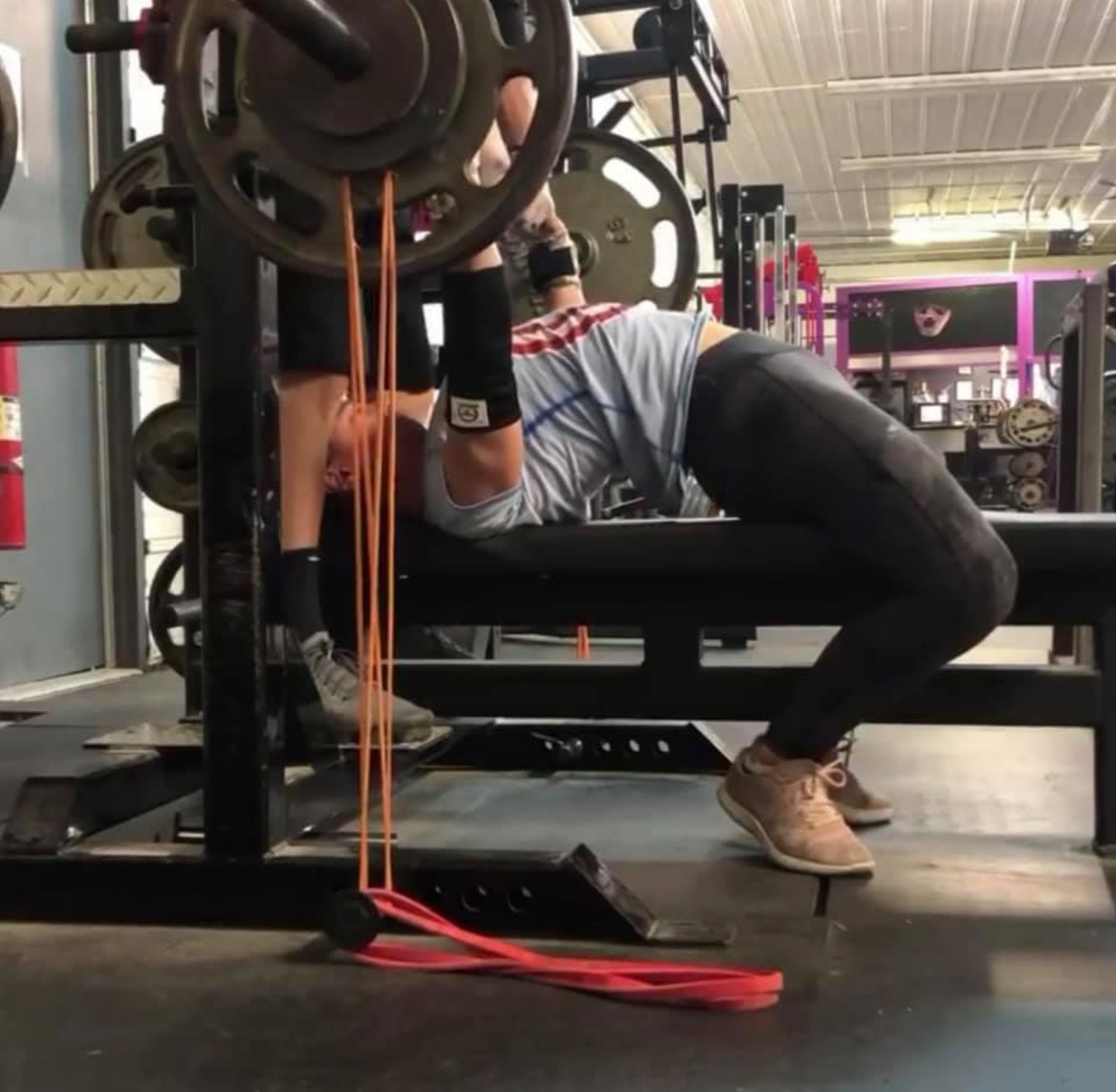
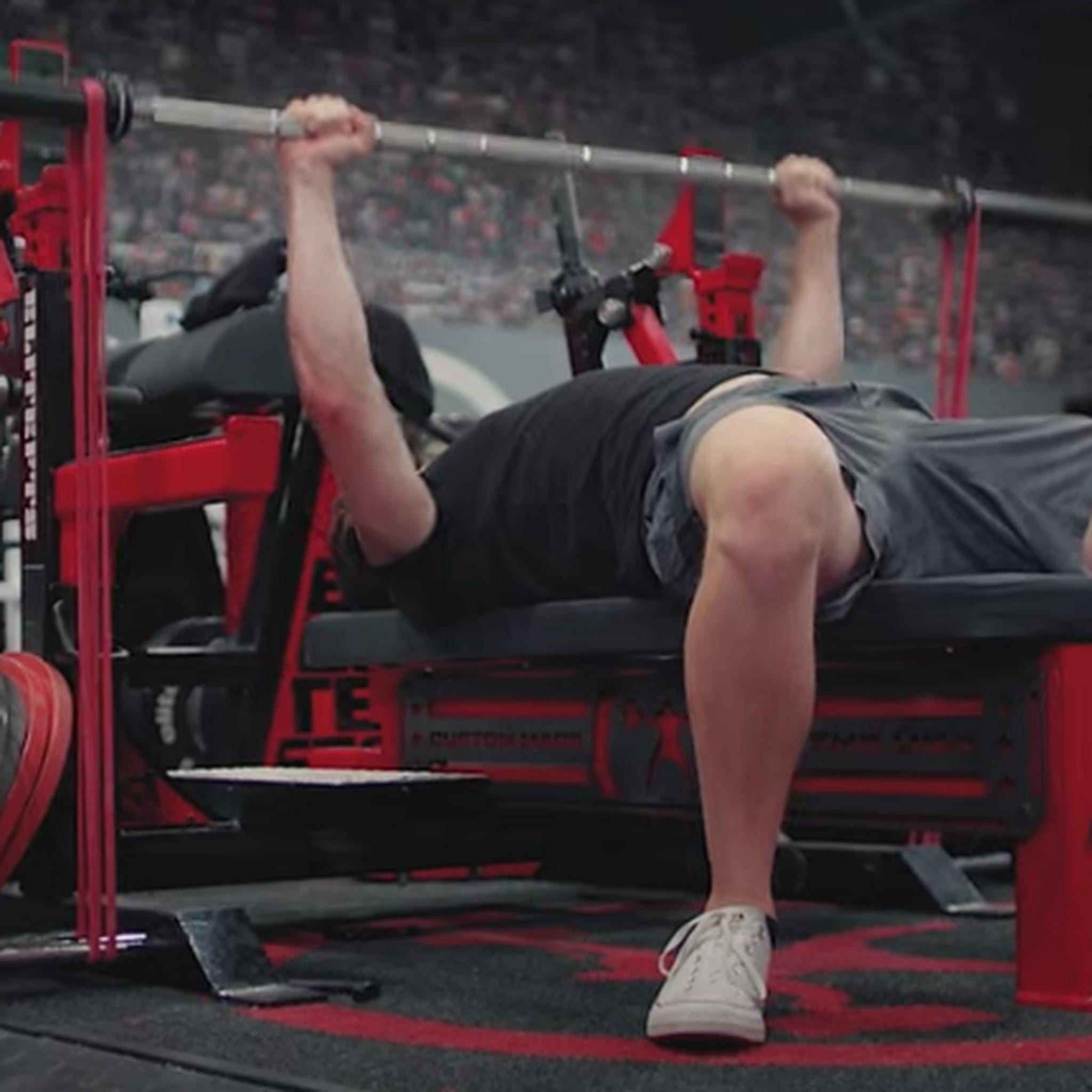
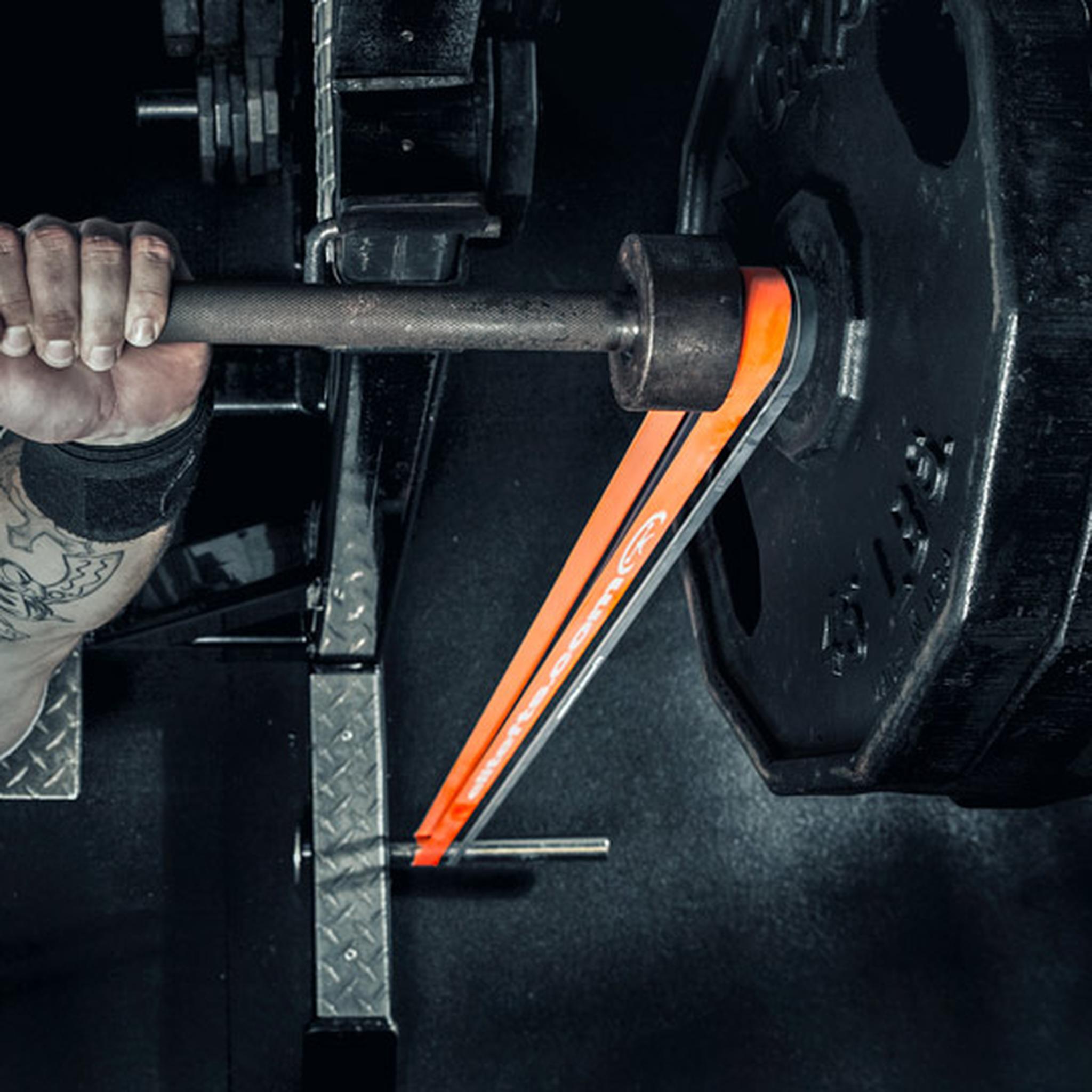
  • Dynamic effort doesn’t mean bands and chains. If you can’t push an empty bar fast, why in the hell would you need to add bands and chains? In some cases the best DE work can be in the form of jumps, sprints, plyo push-ups, and medicine ball throws.
  • Remember that the athletic season is the deload for most athletes. Use every week possible during the off-season to get stronger and improve conditioning.

I asked Joe to give me the three most basic points to look for when starting a 40-yard dash. Here’s what he told me:

  1. Utilize the back foot push on the start. Make sure your runner is exploding off of the line by pushing with both feet. It’s common to see the back foot look “light” and barely be touching the ground. Make sure you push off of both feet.
  1. Keep a 45-degree shin angle on the start. If your shins are pointing straight up, the runner will “pop” up on the start, rather than drive forward. “Make sure the shins look like two darts pointing down the track.”

3.      Keep your head down. We all know that wherever your head goes, the rest of the body will follow. So keep that head down in order to stay low and keep driving forward.

Those were the three most basic ones, but he also expanded on a few other important points. He also said:

  • Keep your hip slightly above the shoulders.
  • Keep a flat back
  • Hand placement on the start line should be directly below or even behind the shoulder. If it’s out in front, it acts like a “kickstand,” preventing the runner from driving forward.
  • “Come out like a dart.”

I asked Joe to explain a few ways to improve one’s vertical jump. His remarks were:

  • Remember that the descent is the most important part of the jump. The faster you go down, the faster you come back up.
  • Only go down to a quarter squat depth. Any deeper is a wasted movement.
  • Keep your feet inside your hips.
  • Arms down, arms up. The arm drive adds momentum to the jump in both directions.
  • Do weighted box jumps.
  • Rest one full minute between jumps.
  • “Just get f***ing stronger.”

Joe was asked about how to approach in-season training for athletes. He said, “You have to find a happy medium because it’s usually either way too much and most often, not enough.” Joe continued by saying that it should be dependant on how much “action” the athlete will see during the competitive season. If he/she is a sophomore playing only one shift per game on the varsity team, they can pretty well maintain the same training protocol in the off-season. But if it’s the starting running back who carries the ball 40 times per game, you need to back things off some. Joe said, “What happens with the guys that play a lot is that they try and keep training the way they did in the off-season and then end up worn-out. So they quit training all together instead of just adjusting what they were doing. The guys who only play once per game also don’t train just because it’s the competitive season. They end up losing all of the gains made over the off-season.”
The following are just some random points Jim, Dave, and Joe covered during the seminar. (The format of the seminar was “open forum” so sometimes we got way off topic.)

  • You have reached your “max” on any lift when your form breaks. (I found this to be especially important when working with younger lifters. Fewer bad habits will be developed.)
  • If you want to be a “bad ass,” you have to be bad ass all the time. Being really dedicated to training over the summer or just in your junior year isn’t enough. You have to bust your ass all the time. It takes many years of total dedication to become the best.

(I have a personal story about this point. We have a real “stud” of a football player who trains with us at our gym in Renfrew. He’s got mad skills in just about every sport he plays and is a natural athletic “freak.” For the past two years, he has trained his ass off and has always been very dedicated to practicing his skills. This summer, before heading off to try out for a university football team, he dropped the ball. I would have expected him to put everything into high gear in order to achieve great things in his rookie season. Instead he put in a less than impressive off-season. He may be pissed at me for writing this, but it’s the truth. I’ve heard every excuse out there and guess what? It’s all bullshit. If you truly want to be a champion, you make time to train and everything else is secondary. I’m confident that he will still make the team and probably get plenty of playing time. However, the point is that if he had stuck to being a “bad ass” and dedicated the summer to becoming a complete freak, he would’ve lit up the league as rookie and who knows what other achievements it would have led to.)

·        Make sure you don’t have a lot of missed lifts while training. It develops the habit of failure.

·        There are four exercises for building your lats (according to Jim)—dumbbell rows, chin-ups, dumbbell rows, and chin-ups.

·        Joe’s athletes perform three conditioning sessions per week—one Strongman session, one Prowler session, and one tread-sled session.

·        Remember that everything done in a weight room is general. There is no such thing as sport-specific weight training. (Olympic lifting and powerlifting are the exceptions.)

·        Let sport-specific skills be part of the warm-up. This is a good opportunity to practice specific movements. Get to know the position coaches of the athletes you train. They can tell you what types of drills are going to help build specific skills.

The seminar seemed to be over way too fast, even though we were there for almost ten hours. After the open forum discussion broke up, I stuck around to try and absorb as much good information as I could. It is very true that the best information is always shared in the casual conversations among the experts. Jim went the extra mile and helped some of us out with squat and deadlift form. Thanks again, Jim. I also wanted to ask Dave a bunch of questions regarding business and boy did he exceed my expectations. Thanks again, Dave.


An added bonus to this seminar was the Strongman competition between the top DeFranco athletes and a couple of athletes from Zach Even-Esh’s Underground Strength Training. A group of Joe’s best high school and college athletes battled it out in the July heat in five different Strongman events. These guys had insane conditioning. As a Strongman competitor myself, I was thoroughly impressed with what they did that afternoon. The events were grueling, and all required ferocious mental attitude, elite conditioning, and more strength than your average “athlete.” It was a great example of the successes that Joe gets with the training system he uses.

Another bonus was that we got the chance to meet some of the experts from the Q&A on EliteFTS. It was my version of being at a Hollywood party. John Bott was there. He’s one thick dude. Zach Even-Esh was kind enough to drive my wife and I to lunch (thanks Zach). It’s true what they say about Zach. He is without a doubt the most enthusiastic guy you’ll ever meet when it comes to training. I also got to meet big Kenny, the Doorman’s friend. He shared some helpful advice as a fellow Strongman competitor.

We also got to see Jeremy Frey (I think that was his name) doing DE bench work. I can’t explain how important it is to see a guy who knows what he’s doing train like this. Many things made more sense after seeing him pressing that bar. You can read, watch videos, and talk to people about how to “do the lifts.” However, actually seeing someone “do the lifts” in person makes a huge difference. Even seeing Jim “get set up” on the bench when he was giving a demonstration was a big learning tool for me. There is no substitute for attending a seminar like this if you want to get better and be armed with more tools in your training toolbox. This was by far the highlight of our summer, and I can’t wait for another Elite seminar. (Please come to Canada.)

Elite Fitness Systems strives to be a recognized leader in the strength training industry by providing the highest quality strength training products and services while providing the highest level of customer service in the industry. For the best training equipment, information, and accessories, visit us at www.EliteFTS.com.


Copyright© 2007 Elite Fitness Systems. All rights reserved. 
You may reproduce this article by including this copyright  
and, if reproducing it electronically, including a link to  
www.Elitefts.com.