

Russian Kettlebell's for Powerlifters

By Donnie Thompson

For www.EliteFTS.com


 Just like every other powerlifter out there, I look forward to and enjoy  the top 100 list for each weight class when Powerlifting USA arrives.  The top 10 totals seem to have the same people from year to year. So  how does one move up the ladder from ninth to second or even first? The  competition is so fierce among the top ten that sometimes two kilos is  all that separates one lifter from the next. Who doesn't want to be  number one? It has been my philosophy that in order to beat the best  lifter in your weight class, all you have to do is out-lift them! What  could be simpler than that? This is derived from playing competitive  sports like football or baseball. If you want to play, you have to out  perform the guy in your position. This, my friends is called being a  starter. The first thing you can do to be a starter is having an edge. The  lifter who is smart and has fewer injuries (all the top ten are strong)  will have the longer, more prosperous career. The edge I have found is  in the form of a cannon ball with handles called Russian Kettlebells.

I first started with Kettlebells in March 04. I was sidelined with a  bulging disc in my lower back two weeks before the Arnold Classic. It  happened on the last rep of my last set of deadlifts. Coincidently, it  was also my last training session before that meet. I was devastated.  I was one of the top 10 super heavy weights around, and I could barely  walk. Life sucked at that point. It took eleven days for me to be able  to stand up straight again. I went to the 04 Arnold Classic to help  my training partner, Marc Bartley, who ended up taking second to the  great Steve Goggins. They stopped the meet after the squats to  accommodate the bench only people. We had about four hours before Marc  benched so I went to the Dragon Door booth to meet Pavel. A friend of  mine that I call "Mr. Haney" had been preaching kettlebells to me  for about a year and a half. He was a former South Carolina SHW  powerlifting champion in the 1970's and early eighties. He also had  the shot put record that still stood at the University of South  Carolina. When my back went, I told Mr. Haney to give me Pavel's book  called "Russian Kettlebell Challenge". I read it in two hours.  Anyway, Pavel was very helpful and showed me about four exercises that  helped me a lot; the spreading of the hips, the drop good mornings, the  pulls from opposite sides and the snapping of the hips for the swing.  He promised me nothing on the bench. Eight months later, I found out  his tips worked for both.

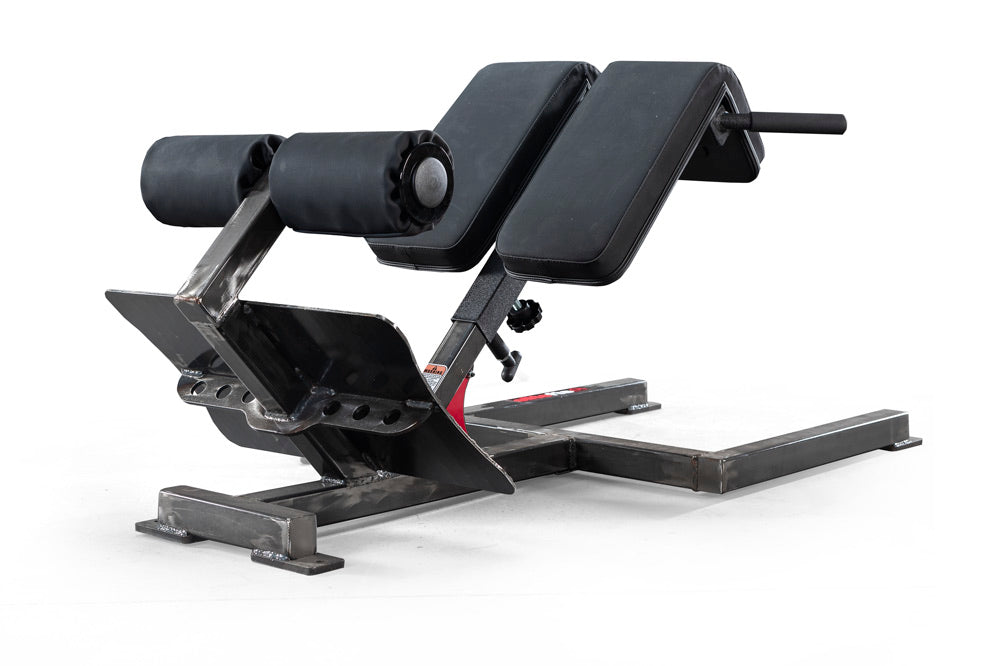
With my friend Mr. Haney leading the charge, we did simple stuff like  one-arm swings between the legs. This led to double kettlebells between  the legs. The back of our legs were in pain for five days. Already  conditioned to Glute/Ham raises and reverse hyperextensions, I was  surprised I got this sore. Then we did double-swings outside the legs.  These lower body exercises we did once a week because we found we were  getting our glutes too overworked for squats the next day.  Conventional' swings spare the glutes, compared to the sumo'  style, and they also transfer to the deadlift well. Wednesday is our  squat and deadlift night. We bench heavy on Monday and light on  Thursdays, so we developed an upper-body routine. After about five  months time, I packed on another  pounds and Mr. Haney 15 pounds of  muscle! I have also lost any neck I had. The muscles in my upper back  and shoulders developed so much from Kettlebell work that my neck  disappeared.
Tuesday is our light upper body Kettlebell day. We mostly use double  KB's for upper body. I start with swings from the sides to eye level.  This is called the double-arm swing. Then we go to the snatch. The  third exercise is the snatch/press. So it usually goes like this;  first, second and third exercises are done in that sequence. Then we go  through a second time. That is six sets all together. Lastly we end up  with a more advanced exercise called the bottoms up press. This is  where you swing both KB's up directly over your head to a static  position. The bottom of the KB is facing the ceiling or sky. You then  carefully lower the KB down to your shoulders and press back up without  letting the KB's flop over. This exercise makes a man out of you.  This is done for three sets after your other exercises. 

Due to its drastic effect on the upper-body, it is hard to perform other  exercises when the bottoms up are done. Your forearms, arms and  shoulders will be fried. Do any combo of KBs you want. For instance,  you can start with 44's then do your second set with 53's. For your  third set, you can try the 62's. Instead of doing double KB swings  you can try one arm swings, snatches and snatch presses. Bottoms up  can be performed one arm at a time also. To learn the exercises, start  with single arm movements. Once you have that mastered, go to doubles.  Top powerlifters and football players would benefit greatly from this.

For the deadlift, I usually don't do any. I practice a few light sets  about four to five weeks out then once I am comfortable I leave the  deadlift alone. With all the lower back pain I have suffered, I don't  want to wake a sleeping giant. We emphasize so much squat work that the  deadlift takes a back seat. When I added a lot of deadlift work in the  past that is when my back suffered injuries. The KBs not only build the  muscles for the deadlift but allow me to get the extra word I need  without my lower back paying the price of injury. We do a lot of upper  back work so when we do deadlifts, there is no problem. Also, you do  not have to do anymore shoulder work in your weight training session.  The KB's will give your shoulders all they can handle. Fellow  lifters, grip strength will no longer be an issue. You will have a vice  grip on anything you grab. The fat KB handle trains this. Think about  it, a better deadlift, faster squat, and shoulders/upper back that  rivals Hercules. What could be better?

After seven months of KB training, I pulled a pr deadlift at the 04  GNC Show of Strength of 832lbs to place me second to Paul Childress. I  went three for three and my bodyweight was 383lbs. SHW lifters are not  supposed to have the stamina to pull three deadlifts, let alone set a  personal record. I only wore a belt, no deadlift suit. I had a near miss  of 804 on the bench only because I could not lock out my left elbow.  That is another story for some other time. Dropping some weight for the  05 Arnold Classic, I came in at 372. It was a wacky day for SHW  powerlifting but I ended up the WPO SHW Champion going only 4/9. With a  lot of luck and my KB training, my dreams were finally realized. The  WPO SHW class is the hardest in powerlifting history. We have 6 guys  that can go over 2600lb totals at any meet. To be the last man standing  was an honor. I am not fool enough to think I was stronger than any of  my competitors. To keep a top position in the WPO, I will have to work  harder and smarter than ever. My secret weapon last year was my  Kettlebells. It is a secret no more. Interest in KB training has most  all the top competitors trying them. My training partner and the top  275er, Marc Bartley, started on them with reckless abandon this past  year. He has two consecutive Arnold victories behind Steve Goggins with  his best yet to come.

It is also very fun for a change. I have been lifting religiously since  1979. It is nice to have something new to look forward to. We also  like doing KB training with others who are not powerlifters. I have had  bodybuilders, football players, female cops and military to do KB's  with. You can perform the KB exercises anywhere. Outside or inside, it  doesn't matter. Change your training regime up all the time. Go for  time. Go for reps. Challenge each other to KB contests. Also, you can  go for endurance. My buddies and I go heavy and challenge each other  all the time. Most of my partners sneak off from their workplace just  to do KB's with me in a group setting. I suggest you purchase  Pavel's book called "The Russian Kettlebell Challenge". Get the  DVD while you are at it. You can purchase them from Dragondoor.com or  Elitefts.com. Once you get comfortable, order the more advanced DVD's  and consider getting RKC certified. Marc Bartley, Mr. Haney and myself  did so last April and we were humbled, to say the least. Remember, to  be the best, all you have to do is out lift the best. That is all!

  Donnie Thompson's Weekly Workout Schedule:

  Monday - Heavy bench day

  Tuesday - Light shoulders

  Wednesday - Heavy squat and deadlift night.

  Thursday - Off

  Friday - Speed bench and heavy shoulders.

  Saturday - Speed squats and lower body kettlebells.

  Progression of Kettlebells for Powerlifters.

I highly recommend that powerlifters have three different size sets of  kettlebells at their disposal. Pairs work much better for increasing  strength and mass. For example, the intermediate powerlifter (usually  around 0-400 pounds under elite) should have 26's, 35's and 44's. The more advanced powerlifter might want to start out with 44's, 53's  and 62's. This is a great range for anyone starting kettlebells. You  also might want to purchase a heavy single k-bell like the 88lber. Top  level powerlifters who have some K-bell experience should try the 53's,  70's and 88's. This is a real muscle and strength builder.

Every level powerlifter should start with one arm swings. When you get  comfortable and good enough is only when you should attempt the double  arm swings and snatches. We spent about five weeks with one arm swings  only.

  Beginners schedule -1-3 times a week

One arm swings between the legs 3X12 (use this with all your exercises.)  This leads into the one arm snatch from between the legs. Next try the  one arm snatch and press. Another technique I like is what I call the bowler (as in bowling)  technique. One arm swing the K-bell from outside your leg. This will  develop great glute power.

 End the session with swings between the legs alternating the k-bell from  hand to hand. Start with your left to right back to left. Come up with  tremendous power to lockout. Don't play passive. Breathe out hard at  the top of the movement and pull your belly button to your back side.

  Intermediate

You can now incorporate the double arm swings. Also, make sure to group  your sessions into upper and lower body. This is important because you  may get too fatigued with DOMS that you will have to miss your barbell  training. We have had success with light K-bell upper the day after ME  upper body (heavy bench day) followed by heavy K-bell upper the day  after the DE upper body (speed bench day). Lower body K-bell training  is designated for DE lower body day (speed squat day). You end up  training about 5-6 times a week so juggle it however you want. You can  also perform K-bell training as second work outs or replace you barbell  training day with it every so often. Do this in your off-season only.

Advanced

 Advanced powerlifters can add all kinds of extra lifts found in various  kettlebell books and DVD's. Some of my favorites are the bottoms up  presses form swinging position, Windmills incorporating the two hands  anyhow and the one-arm bar. I also like the double arm kettlebell  swings between the legs. Double kettlebell front squats are awesome  extra work and I even incorporate a band to stand on. The Turkish get  up is very important for all levels of 'girya' users. I personally do  not do it at my current body weight because it causes my right quad to  feel like it is going to tear every time I try it. So when I am lighter  I will definitely be doing that.

Russian  Kettlebell Challenge Book

Russian  Kettlebell Challenge DVD