

Program Design for Athletes

By Mladen Jovanovic

For www.EliteFTS.com


I’ve gained a lot of knowledge this year and have read some interesting material recently that I’d like to share. This will not be a fluid and comprehensive guide to resistance training design but rather a series of thoughts along with some ideas and quotes.

So let’s start....

1. A resistance training program design depends on the goals of the athlete, his sport, his strengths/weaknesses, current level of fitness, and training cycle. It also depends on other components of the training system.

2. Most commonly, strength training for non-strength athletes (and non-building athletes) is geared toward improving the general strength of the whole organism. Thus, resistance training should be viewed as a general means or a “means to an end, not an end to itself!” Many athletes seek for specificity in resistance training—a dangerous practice indeed— because this can increase muscle imbalances and specific stress. Keep resistance training general. Try to improve athletes’ weaknesses (muscle imbalances, posture, movement impairments, etc.) and strengths using a general approach. Use actual sport practices and most specific means (general specific and specific) to apply “this gained general strength.”

3. Exercises can be classified as total body, upper body, lower body, and core work.

4. Total body exercises can be further split into pulling, pushing, and hybrid movements.

5. Upper body compound exercises can be further split into the horizontal press, vertical press, horizontal pull, and vertical pull. Isolation movements can be split into the elbow extension, elbow flexion, and shoulder and wrist rotations.

6. Lower body compound exercises can be further split into knee and hip dominant exercises. Knee dominant exercises can be further split into double leg and single leg variations (single leg variations can be done on various planes like horizontal, vertical, lateral, etc.). Hip dominant exercises can be also split into single leg and double leg variations, and both single and double can have their subgroup of bent leg and straight leg. Isolational lower body exercises can be hip extension/flexion, adduction/abduction, knee extension/flexion, ankle flexion/extension, etc.

7. Core work can include various movements of the trunk, but I prefer only stabilization movements for supplementary work and corrective exercises. The squats will deal with core in the most “functional way”—no need to pound the core more! Stuart McGill showed that neither strength nor flexibility of the core protected the athlete from injuries. Good coordination/motor control of the core and the athlete’s endurance is what is protective. Shirley Sahrmann stated that the goal of core muscles is to prevent, NOT create the movement of the core. Doing large volumes of classical abdominal work may predispose athletes to develop non-optimal motor programs of the core. For core work, I use only corrective exercises (this also includes scapulae impairments).

8. Here is a table of exercise classifications for easier digestion.

Main exercise classifications:

Total body

Lower body

Upper body

Core/torso work

Total body classification:

Pulling movements Pushing movements Combination movements
Full pull and catch

Hang clean

Hang snatch

Triple extension

Clean grip shrug pull

Snatch grip power pull

Presses

Push press

Dumbbell push press

Jerks

Split jerk

Power jerk

Hang clean to power jerk

Squat to push press

Hang snatch to overhead Squat

Dumbbell clean to push press

Lower body classification[i]

Knee dominant
Double leg

Single leg

Leg push Horizontal Lateral Vertical Lateral /Vertical
Full back squat,

parallel squat,

front squat, deadlift, Sumo deadlift,

overhead squat,

double leg extension,

double leg curl

One-leg squat,

Bulgarian squat,

split squat,

overhead split squat,

single leg, extension

single leg curl

Standard lunge, walking lunge,

reverse lunge

Lateral lunge,

shuffle lunge

High step-up, low step-up Lateral step-up,

Crossover, step-up

Hip dominant
Straight leg Bent leg
Double leg Single leg Double leg Single leg
RDL, Sumo RDL, hyper extensions, reverse hyper, leg raises Single leg RDL,

single leg, hyper extensions,

single leg reverse, hyper single leg raises,

abduction/adduction

Bridges, GHR,

bent leg raises

Single leg bridges,

cable work (flexors),

hip work,

bent single leg, raises

Upper body classification[ii]

Horizontal press Vertical press Horizontal pull Vertical pull Elbow extension Elbow flexion Shoulder rotations
Bench press, incline bench press,

narrow bench press, pull over,

push-ups

Military press, press behind the neck,

dumbbell presses,

plate raises

Bent over row, seated row, scare crows, dumbbell row, one arm one leg cable row,

inverted row

Chin-up,

pull-up,

lat pull down,

standing pull-down,

sternum chin-up

Dips,

cable push-down, various triceps extensions

Curl, reverse curl,

dumbbell curls

Shrugs, reverse raise, front/lateral raise,

rotator cuff

9. The choice of exercises should be adapted to the athlete, his requirements, and his possible movement impairments. For example, wrestlers will probably need a little more upper body pulling movements. An athlete with round shoulders and kiphotic posture (short/stiff abs) should avoid horizontal pushing movements for awhile and instead do vertical pushing movements, horizontal pulling movements, and many corrective exercises. Throwers and handball players should devote equal time to improving shoulder health and include antagonistic work instead of focusing solely on prime movers.

10. According to their goals, exercises can be classified as core/foundation exercises, supplemental exercises, major assistance exercises, and secondary assistance exercises.

11. Core/foundation exercises are multi-joint barbell exercises. Everything else revolves around those “main players.” Preferably, one exercise per movement category should be a core/foundation exercise. This exercise will give the best indication of overall strength. Exercises like squats, power cleans, bench and military press, and pull-ups are considered core/foundation exercises.

12. Supplemental exercises are special exercises used by the Westside Barbell Club to add variety and complement the corresponding core/foundation exercises. Supplemental exercises are done to improve core/foundation exercises with elite athletes or with athletes who have reached very high strength levels and need more stimuli and complexity to progress. These exercises are primarily multi-joint barbell exercises that train similar muscle actions as the core/foundation exercises but at slightly different movement planes and angles.

13. Major assistance exercises assist in the development of the muscle or muscle groups that are used in the execution of core and supplemental exercises. They also work stabilizers and antagonistic muscle groups of the prime mover exercises and help avoid muscular imbalances that can lead to injury. They help in the development of mobility and flexibility, balance, coordination, and proprioception.

14. Secondary assistance exercises are single joint exercises and act as stabilizing exercises for the core/foundation and supplemental exercises. They are included for rehab or pre-hab purposes.

15. Beginners (in resistance training) seeking athletic performance improvements should pick a small number of compound movements, or core/foundation exercises. They should learn them perfectly by using no more than five reps per set and hit them hard EVERY WORKOUT. They should also try to increase their PBs with PERFECT technique. The complexity of training should be very low. There is NO NEED for supplemental exercises because they are done to improve core exercises. Supplemental exercises are done by elite lifters due to the real need for them—not just for the fun! Making training more complex than needed is not a smart thing to do!

With beginners, the core exercises will improve only by executing them and trying to lift more every time. If the goal is not to increase body weight, use 2–3 sets with 2–3 reps with full recovery. Using Western periodization with beginners is NOT NEEDED, nor is any other form of “periodization.” Major assistance exercises like single leg movements and horizontal pulling should be done and can be rotated every 2–4 weeks for overall athletic development. Secondary assistance exercises can and should be used if the athlete has some issues with posture or impairments. Note that correctly chosen core exercises will solve impairment problems anyway, but I think that it is not detrimental to do a couple of secondary assistance exercises for corrective purposes. There is no need to rotate the core exercises or to unload because the beginner’s capacity to recover will not be threatened. The core exercises will constantly develop, so why stop the development and switch to something else when things already work?

16. One situation where beginners need periodization of strength training is when it interferes with other training or the competition calendar. If you plan your training, you should also plan to prioritize training components over time. This may not be needed for beginners, but it is certainly needed for advanced athletes because they cannot adapt to various stimuli at the same time.

17. Pounding hard in the gym with beginners doesn’t mean go to failure or hit 5 RM with the first training session. No! The beginner should start only with a bar or even only body weight and increase the weight every training session until stagnation. After the athlete stagnates, then, and only then, start to play with the training variables like volume, intensity, and unloading.

18. Someone will ask, “What about the anatomical adaptation phase?” Well, I did it when I first went to the gym but now I think who needs the damn thing? Doing 2 X 15 squats can also be done by doing 3 X 5 squats plus warm-up sets and increasing the weight over time. Also, major and secondary assistance exercises play a role in harmonious development, prevention of imbalances, and mobility development. Why the hell do athletes need to spend two months or more doing strength endurance training? So they get bored and quit? Also, we are dealing with athletes who possess a training history before they entered the gym so they had their anatomical adaptation phase years before if the training was planned smartly.

19. Beginners who don’t want improvement in athletic performance but rather a muscle mass increase (and athletes who wish to get some weight) should increase the number of sets for the main exercises and slightly reduce the rest (to increase training density). Use a slightly larger number of major assistance exercises and eat. Everything else is similar.

20. Someone seeking building advice should look somewhere else. Starting builders can begin with a similar program and then switch to a more “specialized” training (super sets, burning sets, rep alternations, accumulation/intensification protocols, etc.) but keep the core exercises the same with a switch over time to “hit” the muscles at various angles.

21. Recreational athletes can also be doing similar programs, but to please them, change the exercises that can be performed frequently. However, keep the compound exercises.

22. Again, the program depends on the athlete’s goals, current state, current year period, and other goals.

23. Basically, the strength training program should use all movements mentioned—both horizontal and vertical push/pulls, hip and knee dominant exercises, and single leg exercises with or without bent leg.

24. For a simple example, see the following program. Note that total body movements like the power clean are done only after the athlete reaches perfect execution of the core lifts. I love to do good warm-ups (movement prep and dynamic warm-up plus pre-hab work kinda’ stuff) and then practice clean techniques (mostly using Mike Stone’s progression) when fresh. Core lifts are kept all the time while major assistance can be rotated every 2–4 weeks. The goal is to improve the core lifts so don’t emphasize the major assistance lifts. Supplemental exercises and rotations of core exercises are not done. This is not because I feel like it, but because they are NOT NEEDED for the beginners! The simpler the better! KISS!

Training A Training B
Core:

1. squat, 3 X 5

2. bench press, 3 X 5

Major assistance:

1. RDLs or GHR, 2 X 10

2. seated rows, 2 X 10

Core:

1. deadlift, 1 X 5

2. military press, 3 X 5

Major assistance:

1. pull/chin up, 2 X 10

2. lunges or split squats, 2 X 10

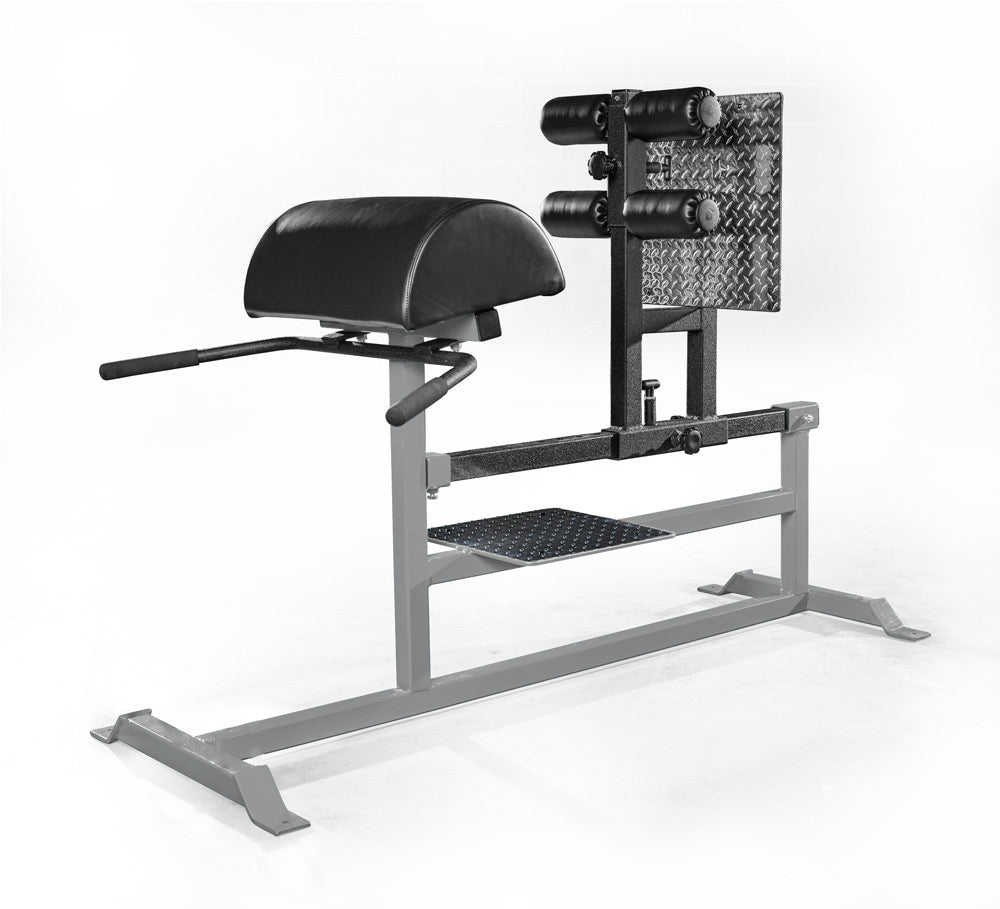
25. Major assistance exercises can be rotated from split squat to lunge to lunge walk, from supported rows to seated rows to barbell rows, from pull-up to chin-up to sternum chin up, and from GHR to reverse hyper to RDLs.

26. Undulating periodization and variety can be used for major assistance lifts.

27. Intermediate lifters should do the same program with the same core exercises but implement unloading phases and volume and intensification alternations. Larger number of exercises should be used, but the same core exercises should be used without any need for supplemental exercises. They should try to hit their PBs every week instead of in every training session.

28. Many athletes will never exit the intermediate lifter phase.

29. Advanced and elite lifters should make their training more complex, but not as the goal itself but to progress. They should start utilizing supplemental exercises in large proportions and switch core exercises every 1–3 weeks to allow intensification.

30. This is based on my current understanding of sports training, so take it with reservations.

31. New thoughts will come soon...

Literature:

1. Bolye Mike (2004) Functional Training for Sports. Champaign, Illinois: Human Kinetics.

2. Kenn Joe (2003) The Coach’s Strength Training Playbook. Monterey, California: Coaches Choice.

3. Rippetoe Mark, Kilgore Lon (2005) Starting Strength. Wichita Falls, Texas: The Aasgaard Company.

Mladen Jovanovic is a student and strength coach in Serbia. He has a deep understanding of the training methods that were pioneered in (his home) Eastern Europe.

Elite Fitness Systems strives to be a recognized leader in the strength training industry by providing the highest quality strength training products and services while providing the highest level of customer service in the industry.For the best training equipment, information, and accessories, visit us at www.EliteFTS.com.


[i] Feet exercises can be included: toe Rises, DB dorsiflexion, etc.
[ii] Wrist exercises can be included: grip work, palmar/dorsal flexion, etc.


Copyright© 2006 Elite Fitness Systems. All rights reserved. 
You may reproduce this article by including this copyright  
and, if reproducing it electronically, including a link to  
www.Elitefts.com.