
The Reverse Hyper

By Dave Tate


My First Time


We all remember our first time like it was yesterday. For some of us, it marked the passage from boyhood to manhood, and for others, it marked the progression from average to elite. For me, my first time was in a dirty ass gym known as “Westside Barbell Club.”

Westside Barbell is owned by renowned strength expert, Louie Simmons. He was the reason I came to Westside on that day and is also the reason I stayed for over 13 years. Westside was a HUGE part of my life and provided me with lessons and experiences that will last the rest of my days. The one lesson that stands out more than any of the others is the importance of glute, hamstring, and lower back strength. This is why the reverse hyper MUST be used.

My first session on this machine was in 1991 before it had its first patent. On one of the first trips I made to train with Louie, he addressed the squat. I learned how and why to box squat and what the best ab movements were to do to get my squat and pull moving. After all this, I was WARNED not to say a word about the next movement. I was told it was going to be patented and nobody outside of Westside was to know about it.

I was asked to jump up on a table type machine, strap up my ankles, and perform bilateral leg swings. Ten reps later, my lower back was cooked. There I was bent over a bench trying to get my erectors to stop hurting.

Then, I was told that this was where I was weak and that I needed to do this movement to get my lifts to go up. The way that my back felt, I decided against this idea pretty quickly. However, the guys I was training with tossed on 200 or more pounds and did their sets as if they were nothing. They were all bigger squatters and pullers than I was, and I was beginning to see the reason why.

Louie told me how he had injured his back in 1975 and came up with the idea for the reverse hyper. His back had become so bad that he could no longer squat or pull. Before this injury, his best squat was 670 lbs in the 181 lb class (without equipment). In 1983, he was told that they needed to take two disks out, remove bones spurs, and fuse some other disks. He opted not to do this and was determined to find a better way. At this time, he began to focus on a solution that could keep him going. This is when the reverse hyper came to him. After a few years of tweaking the unit, he came up with what is now known as the reverse hyper.

How well did this work for him? In 2002 at 56 years of age, Louie squatted 920 lbs and deadlifted 715 lbs in the 220 lb class (actual weight 216 lbs).


The Real Deal


While I’m not qualified to tell you what is going on at Westside Barbell today, I can tell you what I did while I was there and what I saw everyone else do. I could tell you egotistical stories about how my squat jumped from 760 lbs to 935 lbs over five years and how I never missed a single squat workout because of lower back problems. I could also tell you that the main movements for every lower body day were pull-down abs, glute ham raises, and reverse hypers. For me, the reverse hyper kept me healthy so I could train harder. This was the greatest benefit for my training.

I could tell you all this, BUT I’ve been in the business a long time and KNOW that 99% of you could care less about what I did or what they do at Westside. What you want to know is how this can help you and what others in the same boat as you are using it for.

This is simple because the answers are the same regardless of the reason. You see, the reverse hyper is all about...

  • Keeping your back healthy: As I said, this was a key for me. I’ve also heard back from hundreds of lifters who say that this machine has been a life (or lifting) saver for them. While some of them were elite lifters trying to extend their platform time by a few years, most were average Joes just trying to deal with their lower back pain and get some quality work done in the weight room. We’ve also heard back from many coaches and trainers on how this one machine has extended players’ carriers and has kept them on the field instead of on the bench.
  • Lower back, glute, and hamstring strength: Most people now understand the importance that these muscles carry when lifting, running, and jumping. Nothing targets these the way that the reverse hyper does. This is why we’ve seen the results that you’ll read about below.

Now, you should see that this machine is the “real deal” and should be in every gym in the world.


Louie Says


Louie was out at our warehouse the morning I was putting this article together. So I took this opportunity to ask him what he felt were the top benefits of the reverse hyper. 

He told me...

  1. restoration 
  2. lower back strength 
  3. hamstring strength 
  4. glute strength 
  5. rehabilitation 

To expand on this, I found some of his old articles and pulled some statements to support his list.

From “Deadlifting Training, Part 3,” October 2005, PLUSA: “One other very important machine, the Reverse Hyper machine, will not only build the hamstrings, glutes, and spinal erectors but also traction the low back by rotating the sacrum and rehydrating the disks. (The Reverse Hyper machine has two U.S. patents, a third patent pending, and a U.S. trademark.) This machine is used at least four times a week. On a strap Pro model, Chuck’s normal weight is 480–520 for 3 sets of 10 reps. On the same day, Chuck will also do 3 sets on a roller Pro model. The usual weight is 360 for 10 reps. This workout is done Monday and Friday. On bench days, he performs 2 sets of 15 reps on just one machine with about 70% of the weight of the heavy day. Also a lot of leg curls are done with the roller Pro model.”

“Training the Back,” January 2003, PLUSA:We have been using the Reverse Hyper machine since 1975. It builds not only the lower back but also the hamstrings and glutes. The real secret of this machine is that it tractions the vertebrae while you use it so it builds strength and works at restoration at the same time. We do these at least four times a week—twice heavy and twice light. Chuck Vogelpohl and I use the Reverse Hyper machine heavy before and after squatting on Friday mornings. I do them light on Friday evening. This is repeated on Monday, max effort day. On Tuesday evening, Eskil Thomasson and I do heavy again because they traction the back so you can do them repeatedly throughout the week. The reps range from 8 to 12 on heavy workouts and 15 to 30 on light workouts.”

“Back and Ab Training,” April 2002, PLUSA: “Reverse Hyper extensions. For the mid to the very lowest part of the back, the Reverse Hyper machine is far superior to any back exercise. Not only does it completely work the low back but it will rotate the sacrum. Also, on every rep when the plates are under your face, it opens the disks and allows spinal fluid to enter, thus providing restoration in addition to strength building.”


Training Protocols


From our exercise index:

Exercise: Reverse hypers
Category: Supplemental
Muscles targeted: Glutes, lower back, and hamstrings

This exercise is regarded by many strength coaches as being the best lower back, hamstring, and glute exercise. This is because it allows you to train all these muscles in unison. This is important because the muscles of the posterior chain are the same muscles responsible for running and jumping.

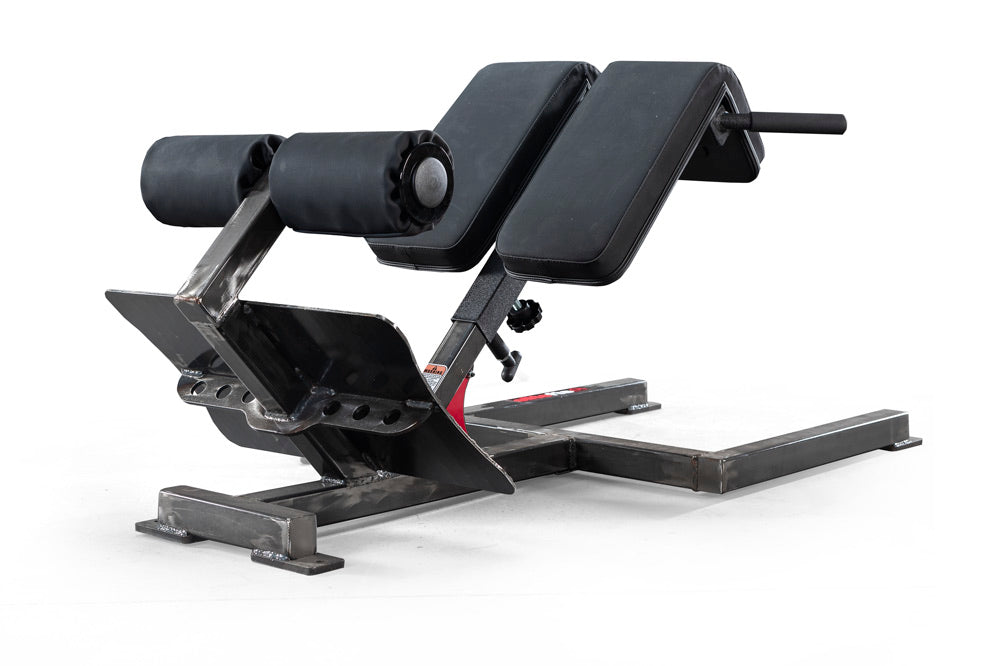
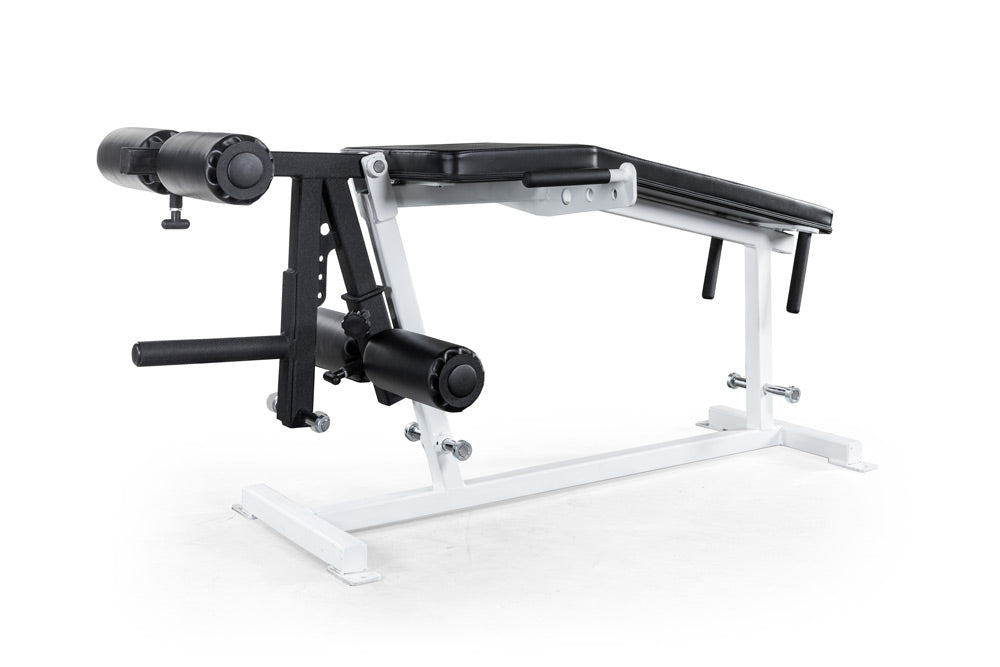
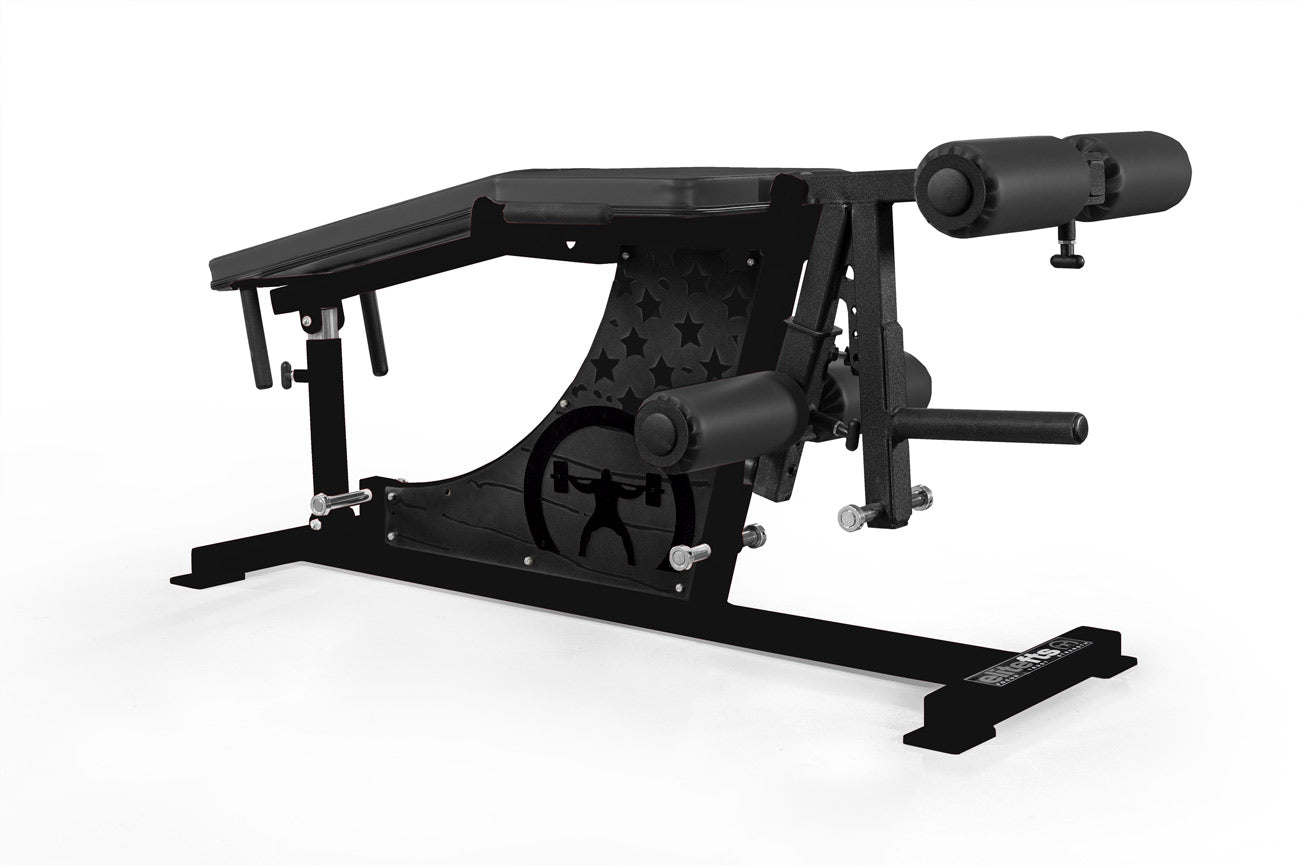
This is performed on a special bench invented by Louie Simmons of Westside Barbell Club. This exercise is also being use for rehabilitation purposes for those with back problems or herniated disks. This is because the bench decompresses the disks when the weights are in the midpoint position. To perform this exercise, there is a strap that wraps around your ankles. You jump on the bench with your face down. Your entire torso is supported by the bench. This allows for your legs to hang down at a 90 degree angle. You perform the movement by contracting your glutes and raising you legs up to a horizontal position.

At this point, you try to contract your glutes and lower back as tight as possible. Then you lower the weight past the 90 degree starting point to a position where your ankles are in alignment with your head. This is the point where the disks are stretched apart to allow fluid to enter the joints.


The Models


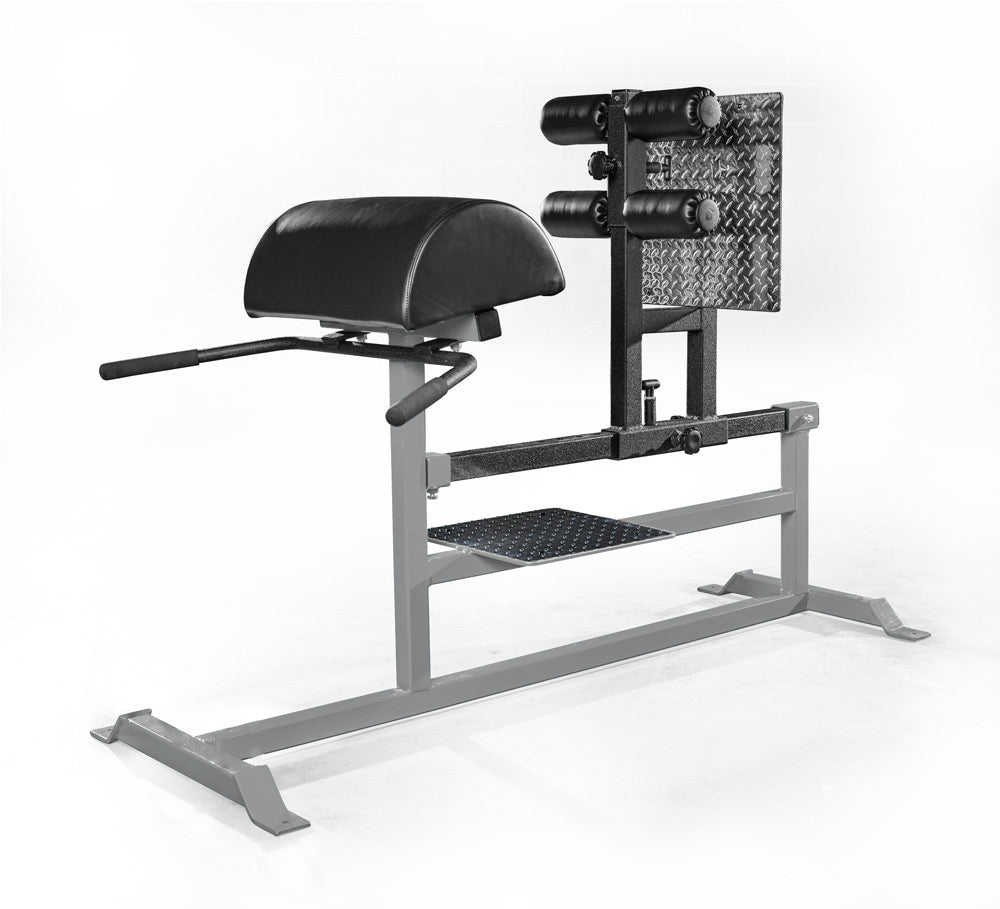
There are three models of the reverse hyper: 

  • The Reverse Hyper Pro: This is the original strap version that is still very popular today. This is the unit that started it all and has become the mainstay of most serious training programs.
  • The Reverse Hyper Ultra: This is the newest of the group and allows the user to use either a strap or roller pendulum.

So what’s the difference? Once again, I could tell you what I think it is, but I already know that you don’t care. I’ll tell you what our customers have told us. 

The pro is favored more by the serious powerlifters. They like the looser style and want to load the machine up as heavy as they can. They also have very good technique so they know how the machine is supposed to feel and can make slight adjustments (like arching or rounding) to get the machine to hit where they want. The roller is preferred by coaches, trainers, and gyms because the roller locks the user into place, making it almost impossible to cheat. This makes it easier to teach. Those who have both models feel that the roller is a much stricter movement and like to use this when they do recovery work and want to keep the movement tight. They use the strap when trying to build more strength and use a looser style to allow for more loading. Now with the Ultra model, you can have both. I feel this is the best option all around. I agree that they both offer different benefits, and I used use them both in my training.

This movement was a huge part of my training (two times per week) for many years. The only way to keep progressing was to use three-week waves and change the style each wave. This is one example of how I did this:


Week

Day 1 Day 2

1

Roller (tight style), four sets of 12 Strap (loose style), three sets of eight

2

Roller (tight style), four sets of 12 same weight as week one Strap (loose style), three sets of eight using more weight than week one

3

Roller (tight style), four sets of 12 same weight as week 1–2 Strap (loose style), three sets of eight using more weight than week two

4

One leg roller (average tempo), three sets of 10 Strap (loose style), repeat week one, day two

5

One leg roller (average tempo), four sets of 10 Strap (loose style), repeat week two, day two with more weight

6

One leg roller (average tempo), five sets of 10 Strap (loose style), repeat week three, day two with more weight

7

Strap (tight) for one set, 30 seconds Roller (loose style), three sets of 10

8

Strap (tight) for one set, 40 seconds Roller (loose style), two sets of 10

9

Strap (tight) for one set, 50 seconds Roller (loose style), one set of 10

Day 1 was my max effort squat/deadlift day and would include one max effort movement (working up to one rep max), one standing ab movement, glute ham raises, and then reverse hypers.

Day 2 was my dynamic box squat day and included speed box squats, standing ab work, glute ham raises, and reverse hypers.


There is Only One


The reverse hyper is a patented machine and a trademarked name. So you KNOW what you’re getting. There’s a bunch of crap out there that offers half the range of motion or operates with crazy pads that do half the work for you. Louie has spent his life helping others achieve their goals.


An Early Morning Email


While writing this article, I got the idea to list some testimonials from past customers and some of our Q&A staff so you could read about how other people feel and what they’ve seen with this machine. So I wrote a quick email, sent it out to a group of people that I had in my address book, and headed off to take a shower.

By the time I got out, I had 75 emails in my inbox!!

This alone should be enough to show anyone how great this machine is—75 emails in ten minutes! Rest assured, I’m not going to list them all here, but I do hope you take the time and check out how other people feel about this machine.

“I’ve been using Louie Simmon’s reverse hyper religiously, almost zealot like, for eight years. In the beginning, I was squatting 600–650 lbs at 198 lbs. Over the years, my squat has progressed to 1124 lbs. That’s quite a jump, and I’m positive that I couldn’t have done it without the benefits of the reverse hyper. The early stages are strengthening phases where your entire posterior chain will build and develop. As you grow as an athlete, the reverse hyper becomes a super restorative and recovery tool. I couldn’t train at the level that I do without it! If you don’t use one, you are truly in the dark ages.”Marc Bartley, Owner, South Carolina Barbell, southcarolinabarbell.com, Professional Powerlifter and Trainer


“Since 2000, I’ve built and equipped three different physical therapy and performance enhancement centers, and I’m currently in the process of creating a fourth. (The third, incidentally, is where Donnie works.) In each facility, the reverse hyper has been an integral piece of equipment. I utilize it early in rehabilitation and continue using it right on through the athlete’s return to sports. As a professional Strongman and elite powerlifter, I use the reverse hyper as part of my restorative training on a weekly basis.”Mike Johnston, VP Marketing and Athlete Development, American Strongman Corporation, mike@sctrength.org


“The reverse hyper is a staple in both my speed and rehab programming. I’ve been using it for over seven years with fantastic results.”Martin Rooney, PT, MHS, CSCS, NASM,  Director, Parisi Speed School


“The reverse hyper has been a critical component in strengthening the posterior chain in our athletes. Not only has it improved the strength and power in the lower body of all my athletes, but none have ever sustained an injury to the lower back. Without a doubt, the reverse hyper is the big reason why.

If you train athletes or if you train hard and heavy yourself longevity and health is critical. The reverse hyper is a tool that keeps you healthy while also improving performance! What serious athlete or coach wouldn’t want to improve the health of their lower back while improving strength and power in their lower body?”Zach Even-Esh, http://UndergroundStrengthCoach.com


“The reverse hyper is a must-have for any serious training facility. It’s a one of a kind tool for pre-habilitation, rehabilitation, strengthening, and conditioning of the posterior chain, primarily the low back. Our members use it three to four times a week.”Sean Donegan, Lifter and Proprietor, Bad Attitude Gym, www.badattitudegym.com
 

“The reverse hyper allows me to train my posterior chain without direct impact on my spine, and as a 33-year-old powerlifter and athlete, this is imperative. The reverse hyper should be a main part of any power, explosive, or strength athlete’s training.”Travis Mash, Methodx Sports & Fitness, MethodXSP.org, All-Time World Record Holder at 220 lbs


“The spinal erectors, gluteals, and hamstrings are three of the most important muscle groups to develop for any strength/power/speed development sportsman. In this regard, there are many available means that effectively stimulate these structures. One such means is Louie Simmon’s reverse hyper. I have owned the Pro model for three years, and in that time, it has proven itself to be a regular auxiliary exercise in the training programs of many of my sportsmen. The reverse hyper is equally as effective as a developmental and/or a rehabilitative means.”James Smith, www.powerdevelopmentinc.com and www.elitefts.com


“I’ve used the reverse hyper with great success. Nothing has improved my posterior chain quite like the reverse hyper. My squat and deadlift numbers have gone up considerably after incorporating this piece of equipment into my training. It has not only helped me, but it’s helped my clients as well. I’m a personal trainer/sports and conditioning specialist and have used it with my clients to strengthen and rehab their backs. Also, the reverse hyper helps make my athletes stronger and more explosive because of the effect it has on the posterior chain.”Lance Mosley


“I was introduced to the reverse hyper on my first trip to Westside Barbell. Louie asked me if I had ever used one. Before I even got a chance to say, “No,” I found myself doing hypers with three plates on each side. I thought this guy was crazy. But when I was finished, I found that the hyper had hit my hamstrings and low back like no other exercise I’d ever done. When I began working at the University, I immediately ordered one for my athletes (and myself) to use. After using it on a consistent basis, I found that the reverse hyper contributed to taking my squat from 275 lbs to 375 lbs in a year. And the great thing about the hyper is that you can go heavy with it and make real strength gains, or you can go lighter and use it for traction/rehab purposes. The hyper has always been a staple the day after a squat workout for restoration too. I use it for myself and all my athletes! The reverse hyper should be on every person’s list of must-have equipment.”Julia Ladewski, Sports Performance Coach and Elite Level Powerlifter, www.LadewskiStrength.com
 

“As an MD, I think that the reverse hyper is one of the most awesome inventions ever, not only for performance but also for rehab. If I was asked to recommend a piece of equipment for a physical therapy clinic, it would be the reverse hyper. If you want to improve your speed or if you need help with your low back, this is the machine for you.” Eric Serrano, MD


“The reverse hyper is a must-have piece of equipment for any serious weight room. It’s the only ‘machine’ I use religiously and highly recommend.”Jason Ferruggia, Performance Enhancement Specialist, Men's Fitness Head Training Advisor, www.J1Strength.com 


“I’m not a proponent of machine-based training for athletes. However, I’ve found the reverse hyper to be an unbelievably effective tool for training my athletes. Powerful hip extension is one of the primary keys to improving speed and power in any sport, especially hockey. The reverse hyper is the best machine available to isolate this movement pattern. It’s also an extremely effective rehabilitation tool to isolate hip extension in the rehabilitation of disc mechanical issues and hamstring injuries. From performance enhancement to rehabilitation, the reverse hyper is one-stop shopping!”Matt Nichol, Head Strength and Conditioning Coach, Toronto Maple Leafs, www.mattnichol.com


“Although the strength and conditioning field is constantly changing, the one thing that has remained a staple in my program during the past ten years has been the reverse hyper. Simply put, every serious weight room should have one.” Joe DeFranco, Founder, DeFranco’s Training Systems, LLC, www.DeFrancosTraining.com


“Since the first day i walked into Westside Barbell the Reverse Hyperhas been an invaluable tool in my development as a Powerlifter. In those days I was a novice, today i am among the Elite of the sport.From keeping my back healthy to increasing strength in my posterior chain the Reverse Hyper has been irreplaceable.” Tim Harold Jr. , Elite Powerlifter


“I herniated L4 & L5 discs many years ago.  Right after doing this, I ordered a reverse hyper.  It arrived approximately 6 weeks after the injury.  I started using it immediately.   I have never had a problem with my lower back since.” —Tommy Fannon, Tampa Barbell


“We didn't realize how much we needed a reverse hyper until we finally saved the money and got one. All of our atheletes squats and deads have improved as well as the benefit of injury prehab/rehab. The Reverse hyper is a taple in our in and off season training.” Chris Clark , Granite City Barbell


“The Reverse Hyper is a must have in any gym, sports training facility, high school or college weightroom. I use the reverse hyper with all my male and female athletes twice a week. Their lower backs are stronger than ever and more durable .Most of all their squats and deadlifts have increased drastically since introducing them to the reverse hyper.” Mark Deppen , Head Strength/ Powerlifting coach at Monsignor Donovan H.S, Co Owner www.TrainingYoungChampions.com


“As more information is coming to light about the importance of developing strength in the lower lumbar and spinal erectors, the reverse hyper has now come to the forefront as a necessity in strength programs.    One of the best pieces of equipment to target the posterior chain, the reverse hyper will build the strength you need to increase your deadlift, squat and overall athletic performance.  If you don't have stability you can't create power and you will get injured.  Get a reverse hyper from the man who created it!” Jim Smith "Smitty", CSCS, The Diesel Crew


Copyright© 2007 Elite Fitness Systems. All rights reserved. You may reproduce this article by including this copyright and, if reproducing it electronically, including a link to www.Elitefts.com.